|
In the past ten years, technology has given virtually everyone the ability to shoot stunning video. All you need is a smartphone (and a microphone plugged into that smartphone) to pull it off. That's the good. The bad is that few people know how to get the most out of their equipment, because no one has taught them how to do it right. I'd like to change that, because life is too short for bad video. So check back often, as I will be sharing tricks of the trade that I've learned in over twenty years of experience. All of them will help you to shoot better footage, with better audio, than you even thought possible. |
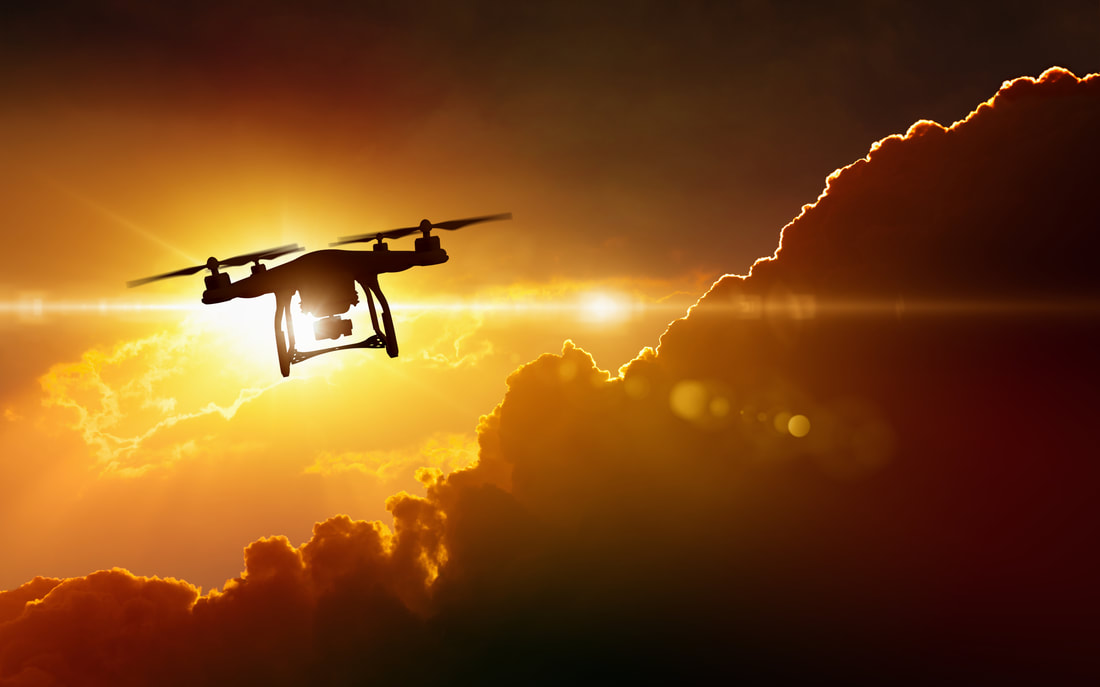 Congratulations! You broke down and bought a drone! If you're like me, you didn't just buy a drone; you bought it two years ago and never took it out of the box, necessitating the re-purchasing of batteries which are long since useless.
Let's face it: while the thought of taking aerial footage that used to only be attained by thousands of dollars spent on a helicopter rental with a camera person makes us smaller video production houses absolutely giddy, drones are scary. Sometimes, it's because of the horror stories you see when perusing YouTube about your new hobby or professional tool. "My drone ran out of battery and crashed into someone's skull." "I tried to take my drone above the clouds, and it was amazing. Until it drifted two miles away and landed in a tree, shattering it." If you're a professional company and want to get licensed, it's even scarier. "You can only fly here, but not there. You can fly this high, but not that high. And under no circumstances are you to fly... here." But to those of us who bit the bullet, studied like a fiend (and yes, you do have to study for the FAA test - it's impossible if you don't), and have become licensed drone operators, drone flying and filming has opened up an entire world of filmmaking possibilities that none of us dreamed was monetarily possible. That being said, just because you have a good drone with a good camera does not mean you're going to get good footage. Drone flying is a skill; drone filming is an art... an art where you can become proficient, but having a couple of basics will help. For starters, before you ever begin filming, take your drone out to a place where you can't do any damage... besides to yourself or the drone. Then, practice taking off and landing. A lot. Really good drone operators can literally hand-land it: drop it low enough, close enough, to where they simply reach up and grab it by the lower strut. I myself have not done this, because while it's a technical piece of machinery, as my dear friend Jay Kelley from Dream Welder Productions says, "It's nothing but a four-pronged descending weed-wacker." Once you have your takeoffs and landings down, you're ready to film. Now the FAA says that you can only go up 400ft, unless you're filming a building, in which case you're allowed to go 400ft above the height of the structure, if you're within a certain circumference of said structure. Told you it was hard. But my take is that much of the time, I get my most beautiful footage when I'm less than 100ft up. And I never, ever, fly it in fast mode when filming. Most drones have a slider on their controls, allowing you to fly in speed-mode, or slower-mode. I use speed-mode for one thing: takeoff. As soon as that drone has stability about ten feet off the ground, I slide it down to slow, and the reason is simple: the faster you fly, the less beautiful your footage. Is this only my opinion? Yes... but it's also the opinion of virtually every drone operator I've reached out to while learning about this craft. They also taught me to feather the controls. If the full direction of the stick is 100%, push the stick in the direction you want at around 10%. This will give you slow, silky, gorgeous footage. And definitely have some fun with it. Say I'm filming a water tower. I like to go sideways across the face of it, but I also like to rotate the drone in the opposite orientation of my sideways direction, so that instead of simply going across the tower, it looks more like I'm orbiting it. Or let's say I want to take a beauty shot of a building from the ground to the roof line. I'll face the building, and as I'm slowly flying up I'll start rotating it to one direction or the other. The effect is simply spectacular. I will say one last thing: whatever drone you buy (Yuneec and DJI are the two biggies), purchase two things: extra batteries, and extra props. Batteries are expensive, but a fully charged one will only net you about 18 minutes worth of flight time. Having a spare is really important, especially if you're filming. And props? Buy the ones made by the manufacturer, as aftermarket ones can make them highly unstable. Found this out the hard way when I crashed it. And you will crash yours. Because everyone crashes their drone at one time or another. Even the professionals. One world renowned drone pilot said, "You're not a real drone pilot unless you crash your %(#@ing drone." Sometimes, things just happen with drones; it's the nature of these beasts. What I can definitely recommend is that you research about things you can do when things just happen with your drone. And even if you're only flying for fun and not for professional gain, you must at minimum register your drone with the FAA. It's quick, it's easy, and it's the law. You can do it here. Happy flying! - Dan
0 Comments
Your comment will be posted after it is approved.
Leave a Reply. |